Rejection as Data, Not Verdict
Marcus applied for a position on a deep-range survey crew. The rejection message arrived in eleven seconds — barely enough time for a human to have read his name. He read it nine times anyway, like the words might rearra
Part 1: Rejection as Data, Not Verdict — Concept
+5 XP on completion

Marcus applied for a position on a deep-range survey crew. The rejection message arrived in eleven seconds — barely enough time for a human to have read his name. He read it nine times anyway, like the words might rearrange themselves into yes.

Here's what Marcus did next: he made it mean something about who he was. Not "wrong fit" or "bad timing" — but "not good enough, probably never was." One data point became a life sentence. Efficient, in the worst possible way.
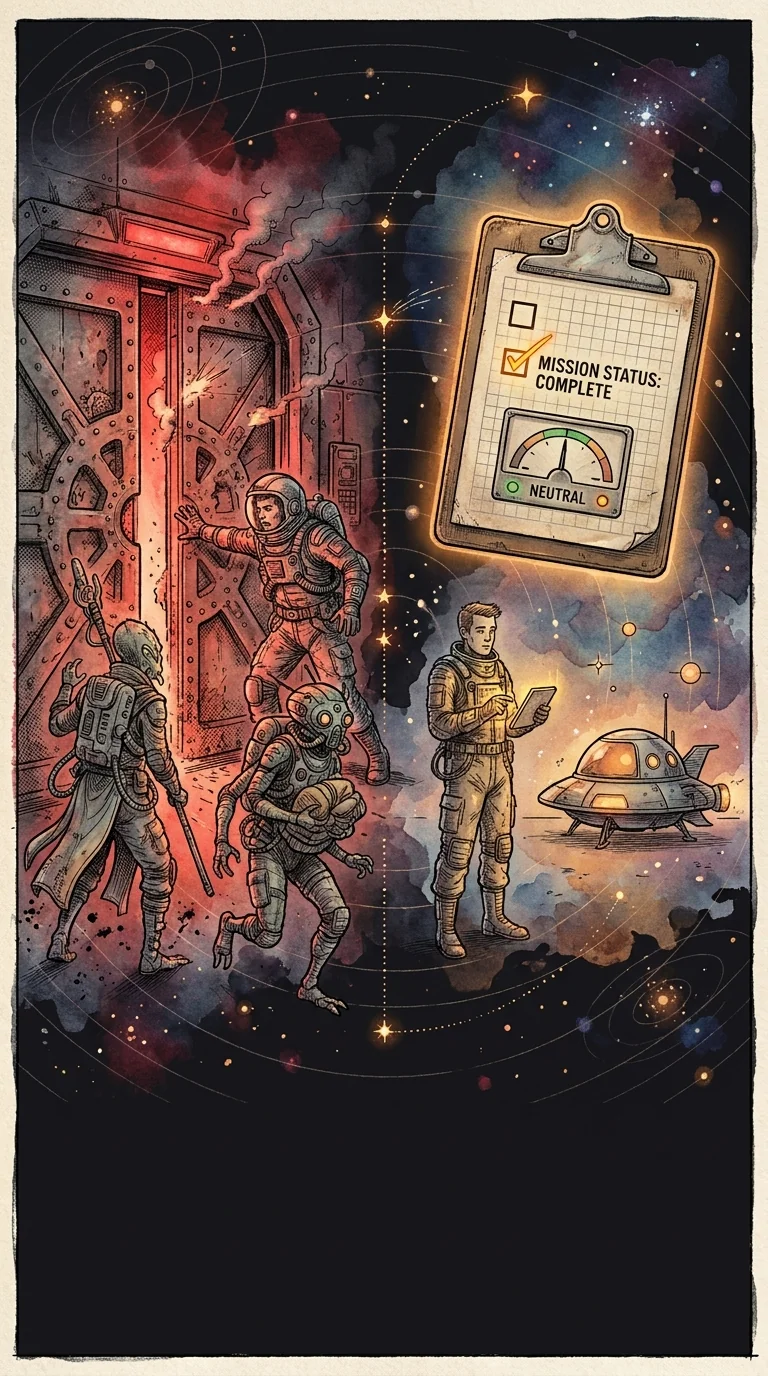
Confident people don't get rejected less. They just stopped confusing a closed door with a diagnosis. A rejection is a data point — one signal from one source at one moment. It tells you about fit and timing, not about your worth as a carbon-based life form.

The mechanism is almost stupidly simple. When rejection hits, you ask three questions: What specifically was rejected? What can I actually learn? And what stays true about me regardless? You separate the signal from the story your brain desperately wants to write.

Marcus tried it. The specific rejection: his navigation hours were below their minimum. The lesson: he needed forty more hours of logged flight. What stayed true: he was still a trained surveyor who'd mapped three asteroid belts. The rejection didn't shrink — it just got specific enough to be useful.

Rejection doesn't stop when you get confident. You just stop letting it author your autobiography. In Part 2, you'll practice the three-question sort — turning your own real rejections into data you can actually use. See you there.
Part 2: Rejection as Data, Not Verdict — Practice
+10 XP on completion

Rejection isn't a life sentence — it's a data point. The question is whether you'll read it like a scientist or a defendant.

Most rejection spirals follow a script: something doesn't work out, and within minutes you've built a whole courtroom in your head — judge, jury, guilty. The verdict was never about the rejection. It was about the story you told yourself after.

Here's the technique: it's called the Three-Column Debrief. Every rejection gets three columns — What Happened, What I Made It Mean, and What's Actually Useful Here. Column two is where the drama lives. Column three is where the growth is.

After any rejection — a pitch, an ask, an invitation that got declined — sit down and fill the three columns. Be honest in column two; that's where you catch yourself mid-spiral. Then write column three like you're advising a friend. You'll be surprised how different those two columns sound.

Marcus pitched a project to his team lead and got a flat no. Column two said "They think I'm out of my depth." Column three said "She wanted more data on cost — that's fixable." He came back two weeks later with the numbers. She said yes. Same idea, better signal.

Every rejection you debrief honestly loses a little of its sting and gains a little of its usefulness. You're not collecting wounds anymore — you're collecting intel. And your dataset is getting very, very good.