The Art of the Genuine Apology
You will say the wrong thing. Not might — will. The interesting question isn't whether you'll blow it, it's what you do in the six seconds after you realize you have.
Part 1: The Art of the Genuine Apology — Concept
+5 XP on completion

You will say the wrong thing. Not might — will. The interesting question isn't whether you'll blow it, it's what you do in the six seconds after you realize you have.

Most bad apologies aren't insincere — they're just terrified. "I'm sorry you feel that way" and "I didn't mean it like that" are escape pods, not repairs. They protect the apologizer and leave the other person holding the wreckage.

A genuine apology does something radical: it names what you did without explaining why you're still a good person. That's the part that makes your throat tighten. That's also the part that actually lands.
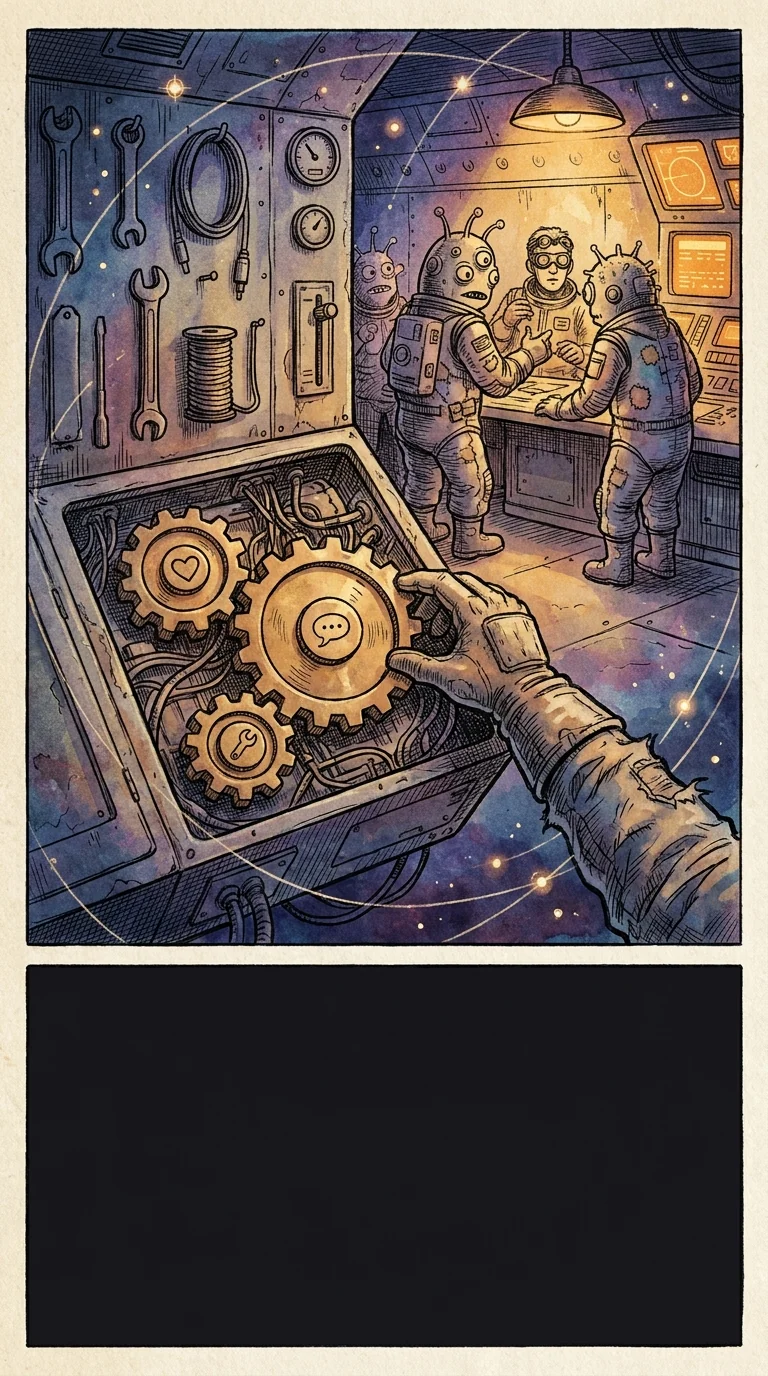
Three moving parts. Name the specific thing you did — not a vague "if I offended anyone." Acknowledge the impact on the other person without qualifying it. Then say what you'll do differently. No monologue, no origin story about your childhood. Just those three.

Marcus made a joke about Lisa's new project in front of the whole crew. Meant it to be funny. Wasn't. Instead of launching into a five-minute defense of his intentions, he said: "That joke landed on you, not with you. I'm sorry. I won't use your work as material." Twenty-two words. Took him four hours to find them. Worth every minute.

The skill worth building isn't never screwing up — it's repairing the connection before the silence calcifies. In Part 2, you'll practice writing a real apology using the three-part structure. See you there.
Part 2: The Art of the Genuine Apology — Practice
+10 XP on completion

You're going to say the wrong thing. The question isn't how to become someone who never screws up — it's how to become someone who repairs well.

The typical apology is a shield disguised as a gift. "I'm sorry you felt that way" translates to "I'm sorry you have feelings that are inconvenient for me right now."

Real repair has a name: the Clean Return. Three moves — name what you did (not what they felt), say what it cost them, and ask what they need now. No explanations. No backstory about your rough week.

"I interrupted you in front of the crew. That probably made you feel dismissed when you deserved to be heard. What would help right now?" Twenty-two words. No self-defense. That's the whole technique.

Alex botched it at a team dinner — made a joke about Maria's idea that landed like a brick. The next morning, Alex didn't explain the joke. Just said: "I undercut your work in front of everyone. That wasn't fair to you. What do you need from me?" Maria blinked. Then she told him. And they actually fixed it.

You don't need to be someone who never missteps. You need to be someone worth trusting after one. The Clean Return is how you earn that — and you already have the words.