The Spotlight Is in Your Head
You walk into a room and feel every pair of eyes lock onto you like heat-seeking scanners. Your collar's wrong, your laugh is too loud, that thing you said landed weird — everyone noticed. Right?
Part 1: The Spotlight Is in Your Head — Concept
+5 XP on completion

You walk into a room and feel every pair of eyes lock onto you like heat-seeking scanners. Your collar's wrong, your laugh is too loud, that thing you said landed weird — everyone noticed. Right?
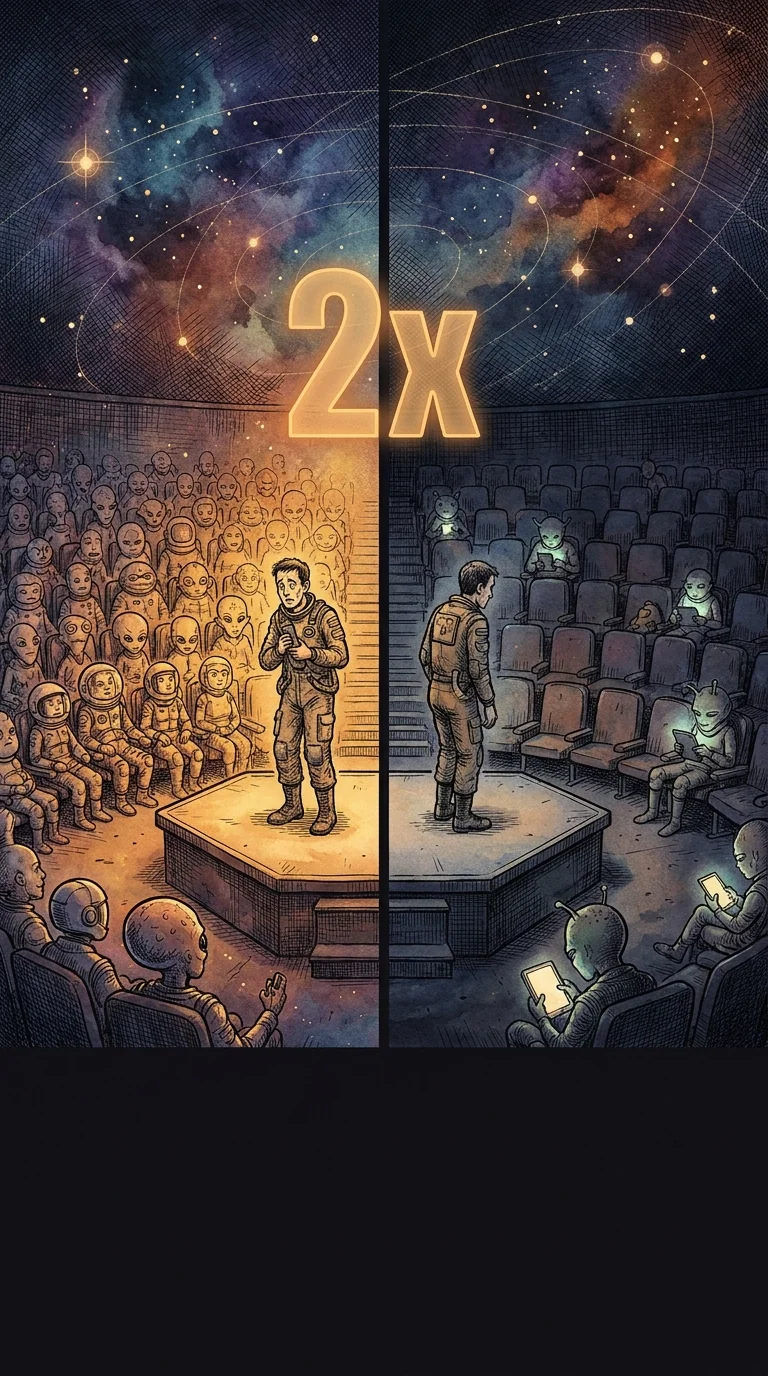
Psychologists call it the spotlight effect — you massively overestimate how much attention other people pay you. Studies show you think roughly twice as many people noticed your embarrassing moment as actually did. Half the audience you're performing for doesn't exist.
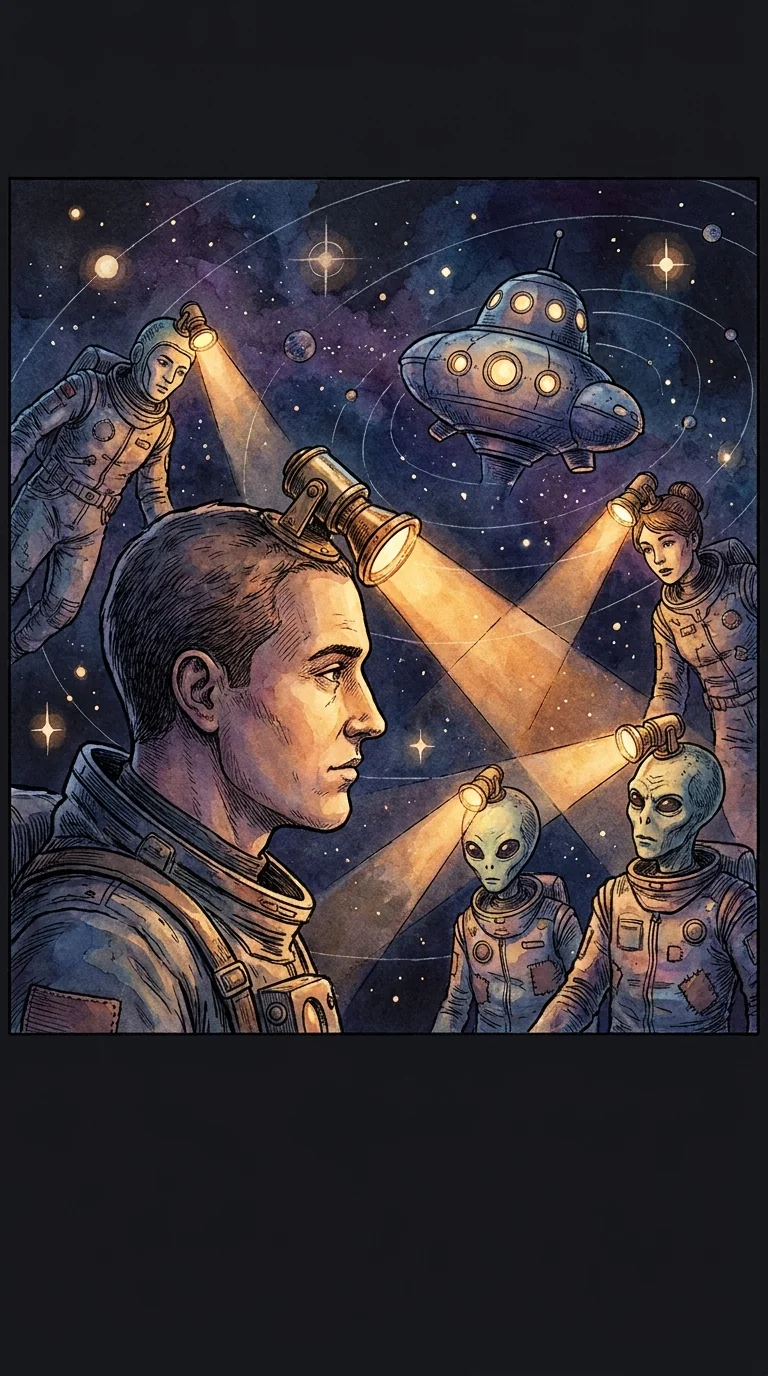
The spotlight is real — you can feel the heat. But it's mounted inside your own skull, pointed inward. Everyone else is too busy running their own private spotlight show to guest-star in yours.
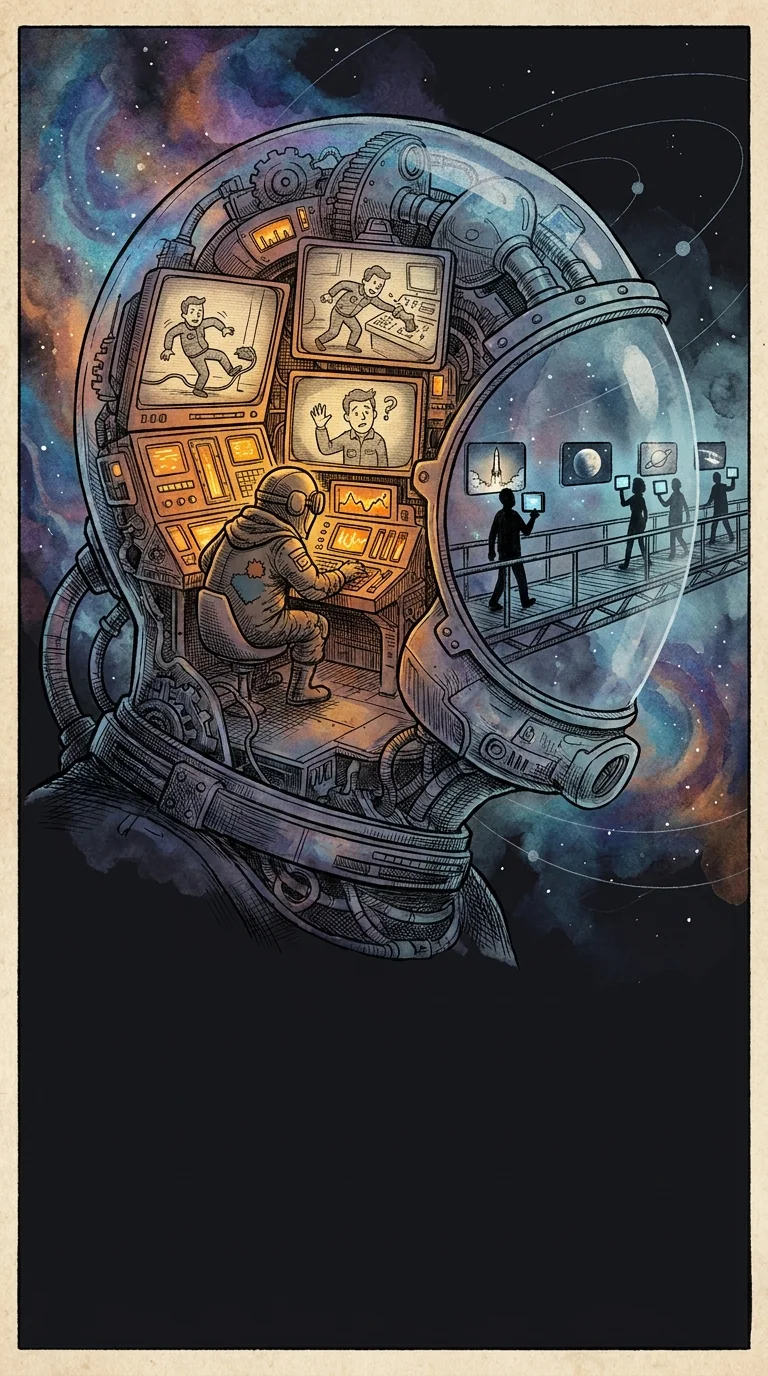
Here's how the machinery works: your brain is the only one with full access to your internal blooper reel, so it assumes everyone else has a copy. They don't. They're rewatching their own.

Marcus spent a whole week avoiding the break room because he'd mispronounced a colleague's name at Monday's meeting. When he finally went back, nobody mentioned it. Two people had forgotten the meeting entirely. One asked if he'd been on vacation.

The spotlight is yours. Which means the dimmer switch is too. In Part 2, you'll practice turning down that internal beam so you can actually walk into a room instead of performing in one. See you there.
Part 2: The Spotlight Is in Your Head — Practice
+10 XP on completion

That giant spotlight you feel burning on you? It's projector equipment you built yourself, and you've been hauling it into every room for years.

When you feel watched, your brain does something predictable: it rehearses, edits, and second-guesses before you even open your mouth. You end up performing for an audience that never bought a ticket.
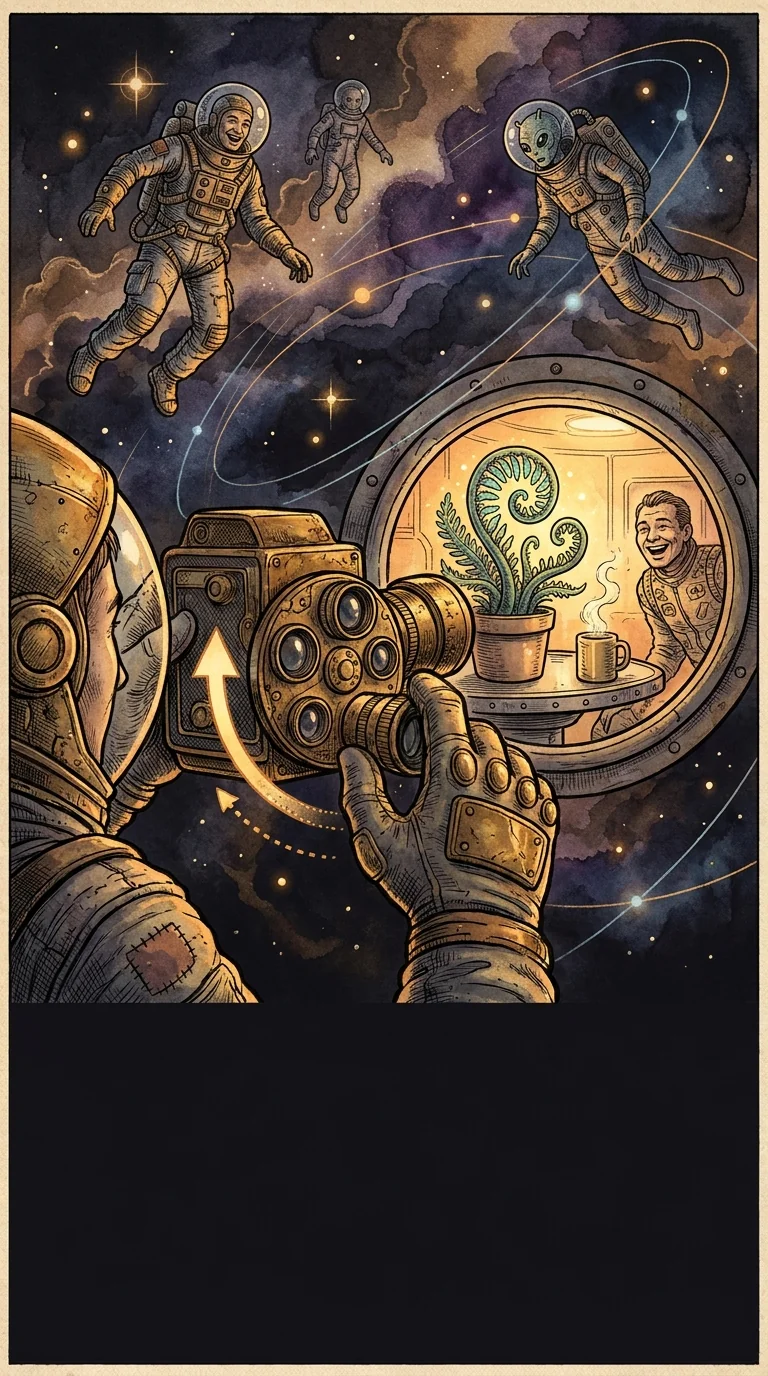
The technique is called the Camera Flip. Instead of monitoring how you look from the outside, you flip your attention outward — onto one real, specific detail about someone or something else in the room.
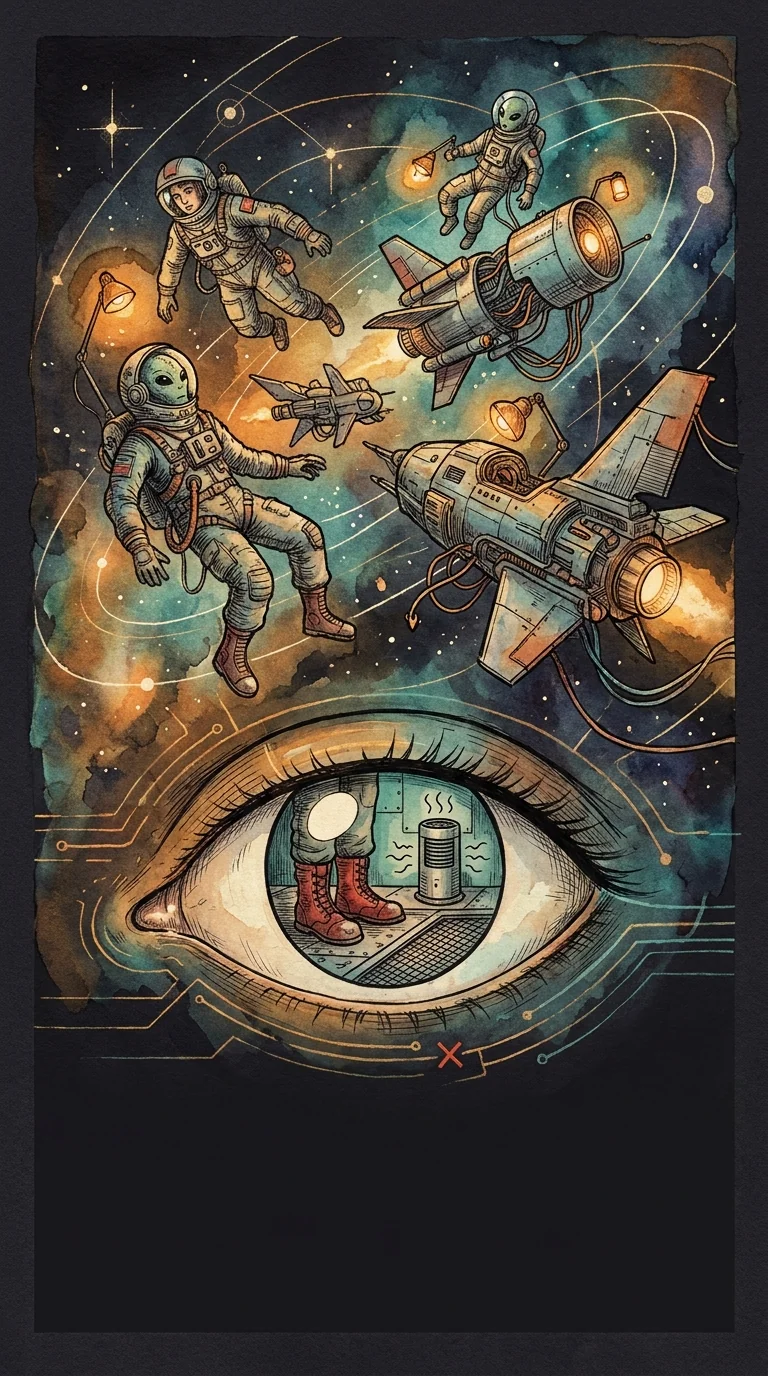
Here's how it works: the moment you catch yourself rehearsing or monitoring, pick one external detail — someone's shoes, the sound of a ventilation system, the color of the nearest wall. Describe it silently in your head. Your brain can't simultaneously narrate a detail and run your self-surveillance program. One thread crashes.

Marcus tried it at a department meeting. Felt the spotlight flare up the second he started talking. So he picked a detail — his manager's ridiculous pen, shaped like a tiny rocket. He described it to himself for three seconds. When he came back to speaking, the spotlight had dimmed to something survivable.

You don't need to kill the spotlight forever — just learn you can aim it somewhere else for a few seconds. That's enough to move, to speak, to do the thing you actually came to do.