The Voice That Holds You Back
You could nail a presentation, get three compliments, and land the account — and the loudest voice in the room would still be the one whispering that you got lucky. That voice doesn't belong to anyone in the room.
Part 1: The Voice That Holds You Back — Concept
+5 XP on completion

You could nail a presentation, get three compliments, and land the account — and the loudest voice in the room would still be the one whispering that you got lucky. That voice doesn't belong to anyone in the room.

Yesterday we talked about the imaginary spotlight — other people judging you. Today's critic is worse: it's the one who knows your exact weak spots, your embarrassing history, your 3 a.m. fears. It has your entire file.
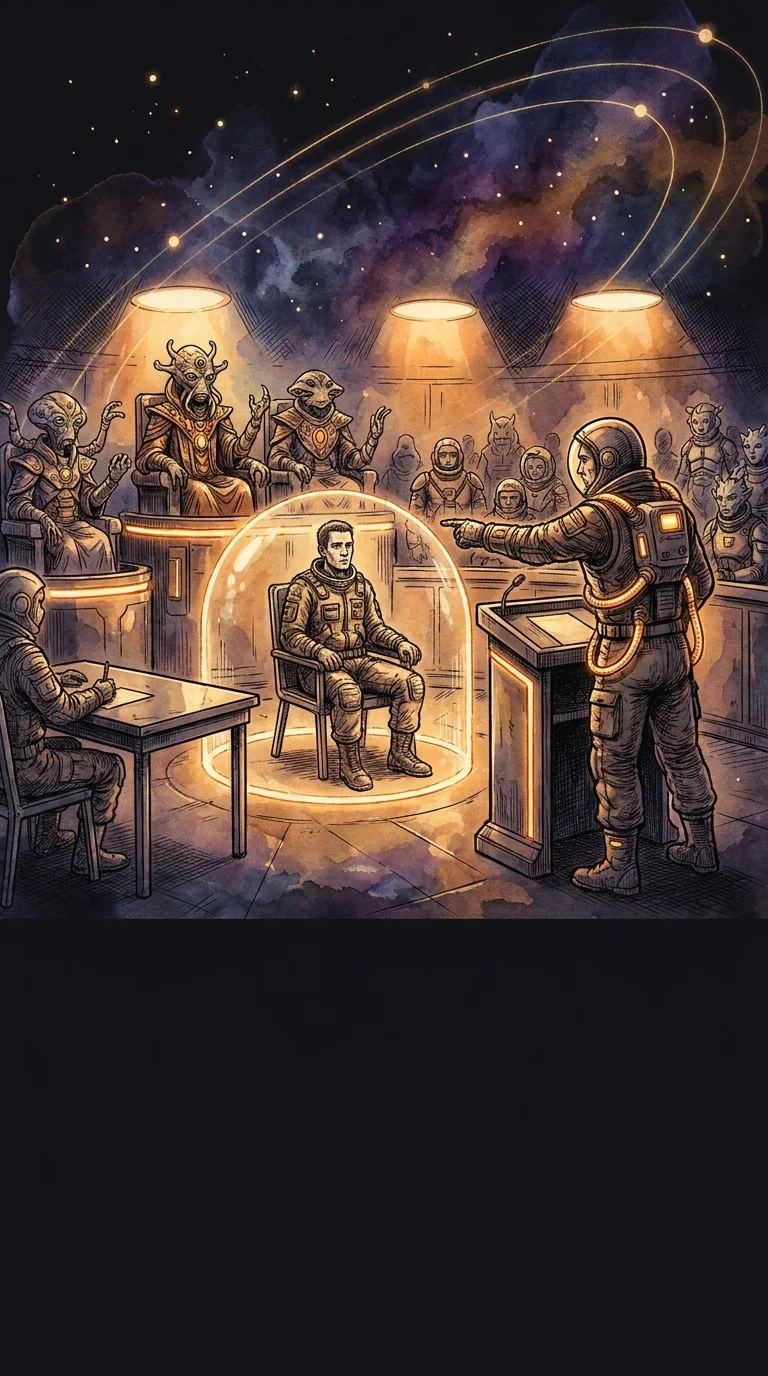
Psychologists call it your inner critic. It sounds like your voice, uses your memories, and passes itself off as reason. But it's not analyzing — it's prosecuting. And it never, ever calls a witness for the defense.

Here's how it keeps its power: it edits in real time. You succeed — it says fluke. You stumble — it says pattern. Every piece of evidence gets filtered through one conclusion it decided on long ago. Confirmation bias wearing your own face.

Marcus got promoted last month. His first thought wasn't celebration — it was "they'll figure out I don't belong here by Thursday." He spent the whole weekend rehearsing apologies for mistakes he hadn't made yet. The critic didn't even let him have the weekend.

The inner critic is loud, but it's not all-powerful — it has patterns, and patterns can be spotted. In Part 2, you'll practice catching that voice mid-sentence and talking back to it. See you there.
Part 2: The Voice That Holds You Back — Practice
+10 XP on completion

You've got a critic on board who never clocks out, never takes a break, and knows exactly where to aim. Time to learn how to turn the volume down on that transmission.

Most attempts to silence your inner critic fail because you're arguing with it — and it loves an argument. You can't win a debate against a voice that has access to all your memories.

Instead of fighting it, try this: name it. Call it "The Critic's Frequency" — a technique where you catch the voice, label it, and step back like a technician observing a signal instead of obeying it.

Three steps. One: notice the harsh thought — just notice it. Two: say to yourself, "That's the critic talking." Three: ask, "Would I say this to someone I actually like?" That last question does most of the heavy lifting.

Lisa caught herself mid-spiral after fumbling a question in a crew briefing. "That's the critic talking," she muttered. Then she asked the redirect question — and realized she'd never shred a colleague for one clumsy sentence. She let it go. The briefing moved on. So did she.

You won't mute that voice forever — it's persistent like that. But every time you name it and refuse to take its word as fact, you're reclaiming a little more of the cockpit. That's not nothing. That's practice becoming power.